How to Build an Impact Framework That Supports Strategic Decisions
The quality of the strategic decisions that an organization makes plays a big role in its long-term success or failure. However, many corporate leaders still depend on gut feeling, incomplete data, or short-term performance metrics for making such critical decisions. This is exactly the reason why a framework that supports strategic decisions becomes a necessity. The right impact framework interlinks business goals with quantifiable results, thus facilitating organizations to make objective evaluations of trade-offs, selection of innovations, and resource allocation with assurance.
The effective framework is not merely dashboards and KPIs. Rather, it lays down a bona fide structured process that visualizes the impact of critical decisions on the customers, the staff, the operations, the finance, and the long-term value of the company. When such a structure is absent or poorly designed, organizations are likely to suffer from misalignment of teams, decision-making biased by personal preferences, and a split between the strategic vision and the execution.
This is a detailed explanation of the steps to create the impact framework that will allow the top management to make well-informed decisions. It will highlight the importance of clarity, governance, data integrity, and continuous improvement—the factors that convert strategy into uniform, visible impact. By means of combining strategic impact measurement, decision-making framework, and business impact assessment, organizations will have a more solid practical base for sustainable decision-making.
Understanding the Purpose of a Framework that Supports Strategic Decisions
A framework that supports strategic decisions exists to provide an answer to a single key question:
“What guarantees can we provide that this decision will advance the organization towards its long-term goals?”
In the absence of a clearly specified purpose, the frameworks usually become reporting tools instead of decision-making systems. The primary function of such a framework is to connect strategy with results. Strategic goals—like market leadership, operational efficiency, or customer loyalty—are put into measurable dimensions that the leaders can assess before resource allocation.
This connection between strategy and results creates a common vocabulary among the departments, thus minimizing confusion and thwarting the making of wrong decisions that are locally beneficial but hurt the value of the whole enterprise. A well-defined purpose also guarantees that the framework that supports strategic decisions is made for different time horizons. Nevertheless, some of the choices are pretty much straightforward in the financial sense, and others, however, take a longer period for the value to come out. So, it gives an insight to the leaders to find a middle way between the short-term profit and long-term sustainable development.
A Framework that Supports Strategic Decisions Aligning with Organizational Objectives
Alignment is one of the most underrated but at the same time an important element of a successful strategy execution. A framework that supports strategic decisions ought to be the connector between the lofty corporate objectives and the everyday decisions in the whole organization.
The process of strategic alignment starts from the clearly stated objectives. If the goals are clear and visible, then the respective initiatives can be evaluated with the same set of criteria. Thus, the teams will know how their actions are bringing about the wider outcomes, which lead to a reduction in internal friction and also prevent decision-making in isolation. Moreover, the measuring of strategic impact will not only be more relevant but also more significant since the metrics will reflect the interlinked outcomes and not the isolated ones taken from the departments.
The third benefit of alignment is that it leads to prioritization. Companies very often have to deal with the problem of competing initiatives, and at the same time, the limited availability of resources. An alignment that is good and strong provides a way that is structured to compare the options based on their expected impact on the strategic goals. This allows the leaders to make the trade-offs that are not only transparent but also defensible and in tune with the long-term priorities, thus building trust in the outcome of the decisions made.
Defining Impact Metrics Within a Framework that Supports Strategic Decisions
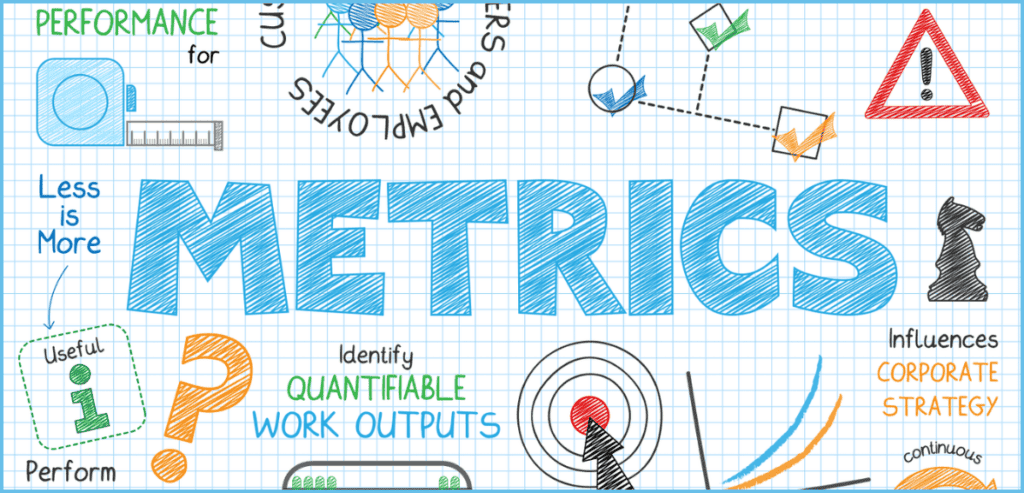
Metrics are the foundation of every framework that supports strategic decisions. The most powerful impact metrics are those that concentrate on the outcomes instead of the outputs. The outputs simply document the activity, while the outcomes provide the real change brought about by the particular decision. Measurement of the outcomes might be difficult sometimes, but at the same time, it gives a much more significant understanding of the strategic performance.
Financial metrics are still a must in the decision-making process, but they should be accompanied by non-financial indicators that foreshadow future performance. They can be the likes of customer loyalty, employee satisfaction, operational effectiveness, and creative output. The overall view of the consequence is provided by the complete combination of profit and non-profit strategies. The clarity and consistency are vital.
Besides, the poorly defined metrics will not only create doubt but also interfere with the decision-making process. A framework that supports strategic decisions builds a common understanding and thus turns data discussions into a fruitful analysis rather than disputes over correctness. However, metrics should still be pertinent. When the strategies change, the indicators must be revisited and tweaked frequently to make sure that the framework that supports strategic decisions is still enabling the process to be informed.
Integrating Data and Insights Through a Framework that Supports Strategic Decisions
Data integration issues are where many frameworks can’t meet the requirements. Strategic decision-making relies on the conversion of data from different sources into a single, easily understandable story. A unified framework that supports strategic decisions places data in the centre, instead of in different operational warehouses.
Data being available isn’t enough by itself. Insight quality has to be the same. Without context, analysis, and interpretation, raw data cannot convey the strategic impact. Static reports offer less understanding than examining trends, correlations, and scenarios. The analysis at this depth allows the executives to foresee the consequences instead of being just reactive after the outcomes.
Flexibility is another requirement. Uncertainties are often involved in the timing of the responses needed for strategic decisions. A well-integrated framework allows faster, evidence-based decisions that are still aligned with the strategy and that do not rely on intuition as much.
Embedding Governance and Accountability in a Framework that supports strategic decisions
Governance is the element that allows for a long-term framework that supports strategic decisions. The very best frameworks, however, lose their effectiveness in the absence of very clear ownership and accountability. The executives should know ownership of the framework, the person overseeing the metrics, and the individual responsible for taking actions based on insights. This is the situation when the framework is active, being continuously used rather than only reported passively.
If one is accountable, one is also responsible, which goes beyond top management. The teams that are responsible for implementing the initiatives must know how their performance will be assessed according to the framework. This alignment not only strengthens strategic intent but also creates a culture that is favourable to the generation of long-term corporate value.
A badly governed framework will not be able to provide continuous service during the power transition or priority shifts. When governance bases its decision-making on common values and the method of evidence-based assessment, it automatically creates trust, consistency, and organizational resilience, thus providing support in times of change and difficulties.
Also Read: Governance That Works: Comprehensive Guide to Nonprofit Management and Oversight
Using a Framework that supports strategic decisions for Scenario Planning and Trade-Offs
Scenario planning can be regarded as one of the most effective applications of a framework that supports strategic decisions. Strategic choices are made amid uncertainty, and executives have to consider several possible results.
With scenario analysis, companies are able to validate their assumptions and to investigate the impact of changing circumstances. By applying the framework in different scenarios, the leaders are allowed to assess the different alternatives in terms of their financial and non-financial aspects. Such a methodical comparison encourages not just more objective conversations but also the lessening of bias.
On the other hand, trade-off analysis becomes extremely crucial in balancing the demands of growth, innovation, efficiency, and stability, which are always competing with each other. The framework offers a unified platform where the different options can be reviewed in relation to the strategic priorities as per present conditions. Furthermore, it makes clear the leading indicators of success or failure, thus granting organizations the chance to change their direction early on when risks show up.
Evolving and Improving a Framework that supports strategic decisions Over Time

A framework that supports strategic decisions is not a deadweight. Its ability to make the right decisions is through continuous learning and adaptation. When the strategies, markets, and operational settings change, the framework has to transform itself to not lose its importance.
Regular assessments are the basis of the new tactics that are being developed. The organizations need to verify whether the metrics, assumptions, and processes still correspond to their strategic goals or not. The presence of the decision-makers is one of the most powerful sources of information, as it tells what is working well and what requires improvement.
It is indispensable to learn from the outcomes. The difference between the intended and the actual impact can be used to measure future business impact, and the quality of decision-making can be assessed and improved. This learning cycle transforms the framework into a strategic asset rather than a compliance tool.
The use of technology can ease the user’s experience with the framework. However, it should not be the one that determines the direction of the framework. The provision of tools for access, analysis, and visualization is expected, but these should not be a distraction to the strategic intent. The primary goal is the improvement of decision-making, not the intricacy of the systems.
Conclusion
Creating a structure that allows for strategic choices is a long-term investment in transparency, consensus, and value creation. The framework, if it is done purposely, according to the organization’s objectives, relying on significant metrics, and supported by sound governance, will become a mighty decision-making system rather than a mere reporting exercise. Organizations that assess strategic impact, extract data-based insights, and value business impact will not only stop reacting to events but also start forecasting and proactively taking measures through their decisions.
They will also be able to predict the outcome of their actions, evaluate several alternatives, and do so with competence despite the intricacies of the circumstance. A framework that supports strategic decisions will not only be a support to the strategy, but it will also be an active guide to it. The framework’s assurance that each huge decision will have a measurable impact on sustainable performance will make it a pillar of long-term organizational success.
FAQs
What is a framework that supports strategic decisions?
It is a systematic method for organizations to analyze their options, considering measurable impact, goal alignment, and value creation over time.
Why is strategic impact measurement important for leadership decisions?
It gives the decision-makers a tool to see the actual consequences of their choices and to compare the sustainability of the future with the short-term profits.
Are there any aspects where a decision-making framework enhances the alignment of the organization’s objectives?
It combines strategy, metrics, and execution, which allows everyone in the organization to apply the same standards for valuing their projects.
In what way does business impact assessment aid strategy development?
Organizations are able to understand the impacts of their decisions better in terms of financial and non-financial areas, and thereby, they know more about the direction to take strategically.
What is the time frame for updating a strategic decision framework?
It needs to be looked at and polished frequently as the business objectives, market circumstances, and performance learning change.